
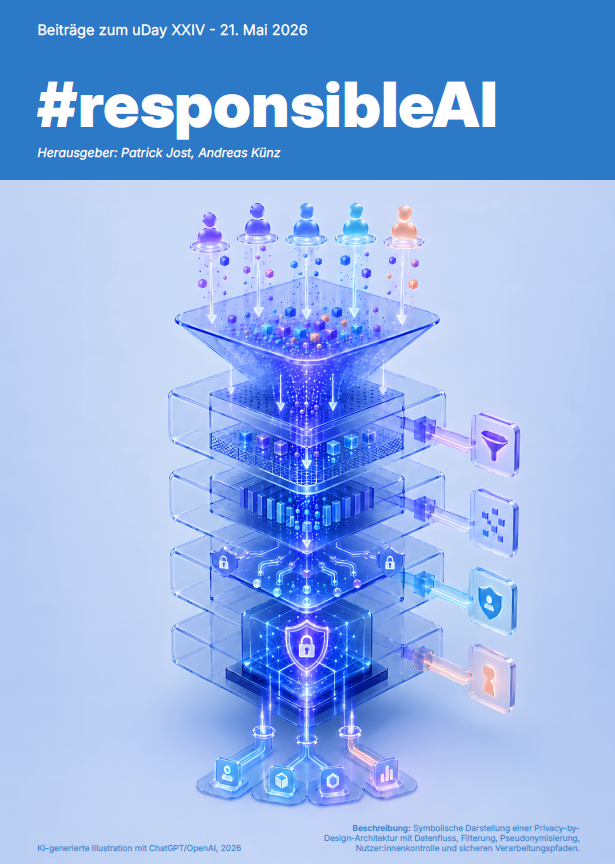
Publication: Simone Broders, “I Know You’re Not Human”: Non-Knowledge, Enlightenment, and the Limits of Social AI”. #ResponsibleAI. Ed. Patrick Jost, Andreas Künz. 21 May 2026. 60-82. Open Access: https://opus.fhv.at/frontdoor/index/index/docId/7363
Summary. This paper examines social AI through the lens of non-knowledge, arguing that current Responsible AI discourse overemphasises knowledge, control, and transparency while overlooking the epistemic uncertainty that structures human–AI interaction. Drawing on Enlightenment epistemology (Locke, Hume, Smith) and Luhmann’s theory of non-knowledge, it analyses Replika and Kindroid as distinct models of relationality. The paper shows that social AI does not simulate relationships, but co-produces them through interaction under conditions of epistemic indeterminacy. Responsible AI, therefore, emerges not as the elimination of uncertainty, but as ethical action within it.
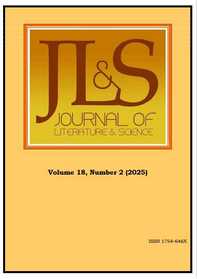
JLS Special Issue The Ethics and Narratives of Non-Knowledge: https://www.literatureandscience.org/(Vol. 18, Issue 2, 2025, published 01 April 2026).
Edited by Simone Broders and Anna Auguscik
The idea of ever-changing scientific innovation in need of new ethical consideration was prominently brought up by astrophysicist Martin Rees, who lists three ‘mega-challenges’ humanity will face in the near future: climate change, biotechnology, and artificial intelligence (11-12) – areas presented as transcending the current limits of knowledge. Two special issues of the Journal of Literature and Science examine conceptual constructions of non-knowledge, the way they are put into narrative, and the positionality of such narratives. They explore what and how literary and cultural perspectives on the limits of knowledge and knowledge-production can contribute to public and scientific debates about the ethics of non-knowledge, in particular regarding the relationship between (non-)knowledge and (non-)agency.
The open-access placement (funded by VolkswagenStiftung) in the JLS is especially relevant to the overarching topic of the conference. The special issues showcase the research of numerous scholars from Anglophone Studies in Germany – from early career researchers to established scholars, including the vantage point of a university of applied sciences. They comprise not only representations of science in drama, fiction and poetry, but also reflections on the use of narratives in non-fiction to convey scientific debates; both in ethical debates on AI and from historical perspectives with regard to non-mainstream narratives in early astronomy. Complemented by international contributions with an interdisciplinary focus functioning as ‘transits’ to fields as diverse as philosophy, physics, and mathematics, this publication increases the visibility of the contribution of Anglophone Studies to current debates on areas of non-knowledge, particularly artificial intelligence and global change.
Watch this space for updates, scan the QR code below or click here to subscribe to our newsletter.